

Publications & Print Design –
Storytelling
Through Visuals
Print design is a unique domain within graphic design, where creativity meets tangible storytelling. Unlike digital media, print offers a physical experience—something readers can hold, flip through and immerse themselves in. Each layout, photograph and type choice contributes to a story that unfolds page by page. For me, publications are more than visual projects; they are opportunities to craft experiences that evoke emotion, convey meaning and leave a lasting impression.
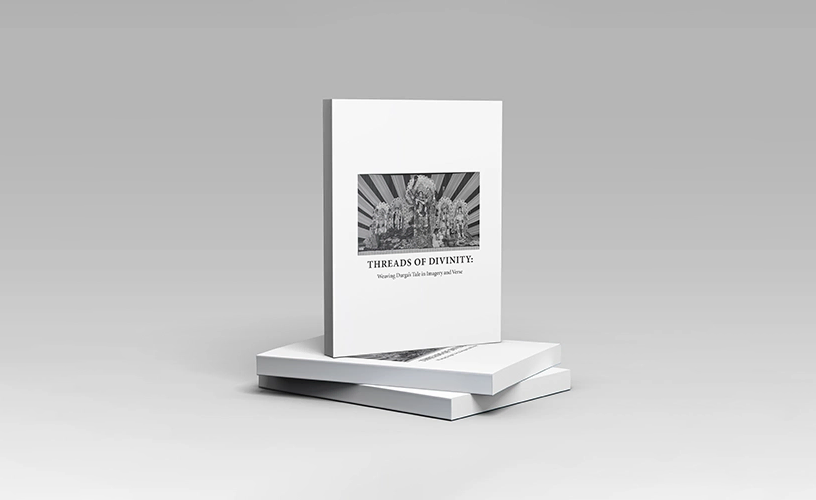
One of my most significant projects in print design was ‘Threads of Divinity’, a monochromatic publication capturing the essence of Durga Puja through photography and poetry. The concept was to create a cohesive visual and literary narrative that honored the cultural and spiritual significance of the festival while also offering readers an engaging and reflective experience
The project began with a deep dive into the cultural context of Durga Puja, exploring its traditions, rituals and artistic expressions. I collaborated closely with photographers and poets to understand the mood, tone and emotion they wanted to convey. This research guided the visual direction, helping me decide how to pair images with verses in a way that enhanced storytelling rather than competing with it.
The design process involved experimenting with layouts, visual hierarchies and spacing to create a natural flow for the reader. Each photograph was treated with care to highlight its emotion and context, while typography choices were made to complement the poetic text, maintaining readability and elegance. The goal was to ensure that the visuals and text worked in harmony, allowing readers to feel the rhythm of the festival as they turned each page.
One of the challenges in this project was balancing the aesthetic appeal with narrative clarity. Some images were incredibly striking but needed careful placement so that the poetry could breathe and guide the reader’s attention. Through iterative design and collaboration with the creative team, I was able to achieve a layout that felt cohesive, reflective and immersive.
The final publication was a journey for the reader—moving seamlessly between visuals and poetry, capturing both the grandeur and intimacy of Durga Puja. The monochromatic approach added depth and focus, allowing the intricate details of the photographs to shine and creating a timeless, contemplative mood. Feedback from readers highlighted how the design enhanced their experience, making the festival feel alive on the pages.
This project reinforced my belief in the power of print design to create meaningful connections. Unlike digital content, print offers a sensory experience—the texture of paper, the flow of pages and the visual rhythm of the layout all contribute to storytelling. Through ‘Threads of Divinity’, I explored how careful design decisions can elevate content, create emotional resonance and transform a collection of photographs and words into a cohesive and memorable experience.
Publications demand a meticulous approach—every element, from spacing to image placement to font choice, carries weight. They also offer a creative freedom that allows a designer to experiment with narrative and visual language in ways that digital media cannot always replicate. Working on this project sharpened my skills in layout design, visual storytelling and collaborative creation, while deepening my appreciation for the cultural narratives embedded in art and literature.
Print design is more than a medium—it is a way to craft experiences, evoke emotions and share stories that linger long after the page is closed. My work in publications focuses on making every design choice intentional, ensuring that readers are not just viewing visuals but engaging in a narrative journey. Projects like ‘Threads of Divinity’ allow me to combine artistry, cultural understanding and design strategy to create print experiences that are both visually compelling and deeply meaningful.
Must explain to you how all this mistaken idea of denouncing pleasure and praising pain was born and I will give you a complete account of the system, and expound the actual teachings of the great explorer of the truth, the master-builder of human happiness. No one rejects, dislikes, or avoids pleasure itself, because it is pleasure, but because those who do not know how to pursue pleasure rationally encounter consequences that are extremely painful. Nor again is there anyone who loves or pursues or desires to obtain pain of itself, because it is pain, but because occasionally circumstances.
No one rejects, dislikes, or avoids pleasure itself, because it is pleasure, but because those who do not know how to pursue pleasure rationally encounter consequences that are extremely painful. Nor again is there anyone who loves or pursues or desires to obtain pain of itself because it is painse

October 8, 2025